
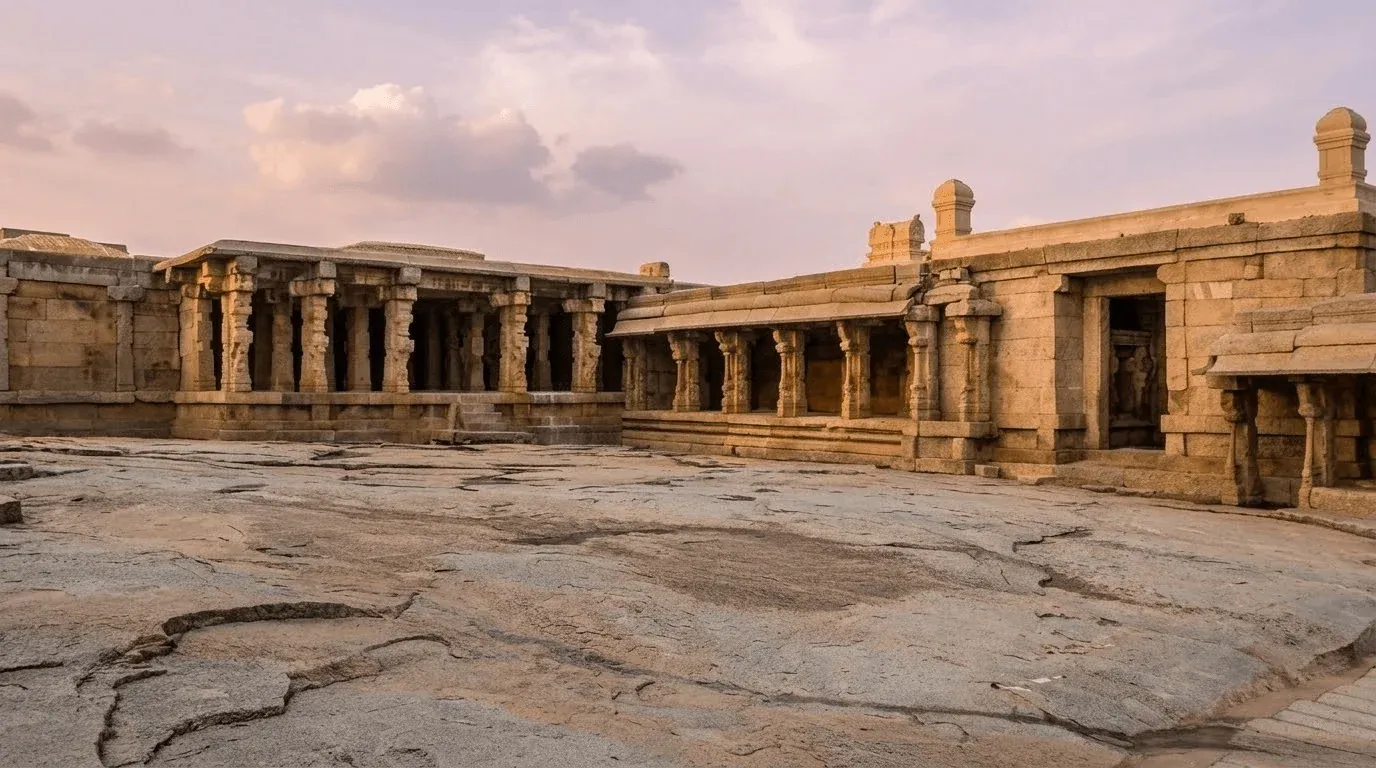
Standing as a magnificent testament to the architectural brilliance of the Vijayanagara Empire, the Lepakshi Temple is a cultural treasure that showcases the pinnacle of South Indian temple architecture. Located in the historic village of Lepakshi in Anantapur district, this 16th-century temple complex is renowned for its extraordinary stone carvings, vibrant murals, and the mysterious hanging pillar that defies gravity.
Lepakshi Temple
Architectural Marvel of Vijayanagara Dynasty
A Glimpse into the History of Lepakshi Temple
Vijayanagara Dynasty Legacy
The temple was built in 1530 AD during the reign of Vijayanagara king Aliiya Rama Raya by Virupanna Nayaka and his brother Viranna, who served as governors under the empire. The brothers belonged to the warrior merchant class of Veerashaiva Vani and were native to Karnataka. The temple construction was funded by the state treasury, showcasing the empire's commitment to religious architecture.
The Blinded Eye Legend
According to local legends, Virupanna Nayaka was accused of drawing funds without the king's permission from the state treasury to build the temple. To avoid the king's punishment, he blinded himself, and even today, two dark stains on the wall near the Kalyana Mandapa are said to be the marks made by his eyes. This tragic story gave the village its name 'Lepa-akshi', meaning 'village of the blinded eye'.
Divine Connection
According to the Skanda Purana, Lepakshi is one of the divyakshetras, making it an important pilgrimage site of Lord Shiva. The temple complex is built on Kurma Saila, a tortoise-shaped granite hillock, which adds to its spiritual significance. The site has been revered for centuries as a place where divine energy converges with architectural excellence.
Cultural Significance
Lepakshi Temple holds profound cultural significance as a living museum of Vijayanagara architectural excellence and artistic mastery. The temple complex houses three important shrines dedicated to Shiva, Vishnu, and Veerabhadra, with the Veerabhadra temple being the most prominent. The temple is renowned for its intricate ceiling paintings that depict various mythological narratives, showcasing the artistic brilliance of the 16th century. The site is also famous for its handicrafts, particularly traditional textile work that continues to attract women from across the country. The temple serves as an important cultural bridge between Karnataka and Andhra Pradesh, reflecting the shared heritage of the Deccan region.
Major Festivals at Lepakshi Temple
Maha Shivaratri
The Maha Shivaratri festival is celebrated with great devotion at Lepakshi Temple, attracting thousands of devotees who come to seek Lord Shiva's blessings. The festival features special abhishekam ceremonies, all-night vigils, and devotional music that creates a spiritually charged atmosphere throughout the temple complex.
Veerabhadra Swamy Festival
The annual festival dedicated to Veerabhadra Swamy is celebrated with elaborate rituals and cultural programs. Devotees participate in special poojas, processions around the temple, and traditional performances that highlight the temple's rich cultural heritage and spiritual significance.
Special Highlight: Hanging Pillar Mystery
The most fascinating feature of Lepakshi Temple is its mysterious hanging pillar, a remarkable engineering marvel that continues to baffle visitors and experts alike. This pillar appears to hang from the ceiling without touching the ground, defying conventional architectural principles. Visitors can actually pass a thin cloth or paper under the pillar, proving that it doesn't touch the floor. This extraordinary feat of ancient engineering showcases the advanced knowledge of the Vijayanagara architects and their ability to create structures that challenge our understanding of physics and architecture. The hanging pillar is not just an architectural curiosity but also a testament to the ingenuity and skill of ancient Indian craftsmen who could create such seemingly impossible structures without modern technology.
Travel Guide to Lepakshi Temple
How to Reach Lepakshi Temple
By Air: Bangalore International Airport is the nearest airport, approximately 100 km from Lepakshi Temple. The airport has excellent connectivity to major cities across India and international destinations.
By Train: Hindupur Railway Station is the nearest railhead, about 14 km from the temple. The station is well-connected to major cities including Bangalore, Hyderabad, Chennai, Mumbai, and Delhi.
By Road: Well-connected by road from Bangalore (124 km), Anantapur (125 km), and Hyderabad (478 km). Regular bus services and private taxis are available from these cities.
Best Time to Visit
The ideal time to visit is from October to March when the weather is pleasant and suitable for exploring the temple complex. The peak season is January and April to May. Temple timings are from 6 AM to 7 PM, allowing visitors to plan their visit conveniently.
Local Attractions
Monolithic Nandi: Largest single-stone Nandi statue in India.
Kalyana Mandapa: Beautiful wedding hall with intricate carvings.
Nagalingam: Magnificent seven-headed cobra sculpture carved from single rock.
Tips for Visitors and Travelers
Wear modest clothing covering shoulders and knees as it's a religious site.
Photography is allowed but avoid using flash inside the main sanctum.
Carry water and sun protection as the temple complex requires extensive walking.
Respect temple customs and maintain silence during prayer ceremonies.
Temple Location
Image Gallery